
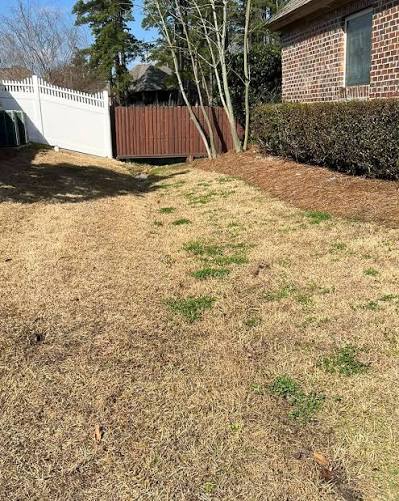
When temperatures begin to drop in Georgia, you might notice something frustrating happening in your yard: your green lawn is starting to turn brown, but weeds are popping up everywhere.
If you have Bermuda or Zoysia grass, this is a common sight during the fall and winter months. As warm-season grasses slow their growth and enter dormancy, cool-season weeds can take advantage of the open space and become much more noticeable.
The good news? With proper identification, correctly timed weed control, and a consistent lawn care program, you can reduce winter weeds and help your lawn look its best when spring arrives.
In this guide, we’ll explain why winter weeds appear in Georgia, how to identify some of the most common varieties, and what you can do to control them.
Why Do Winter Weeds Grow in Georgia Lawns?
Georgia’s mild winters create favorable conditions for many weeds that thrive in cooler weather. While Bermuda and Zoysia grass grow most actively during the warmer months, several weed species begin germinating in the fall and continue growing throughout winter.
As your warm-season grass enters dormancy, it stops actively growing and may turn brown or tan. This creates a noticeable contrast when green weeds begin growing throughout the lawn.
Winter weeds are especially common in lawns with thin turf, bare spots, compacted soil, or areas where weeds were not adequately controlled during the fall.
Some of the most common factors contributing to winter weeds include:
– Missed pre-emergent applications: Weed seeds germinate when the conditions are right if an effective preventive barrier is not in place.
– Thin or unhealthy turf: Sparse grass leaves more room for weeds to establish.
– Mild winter temperatures: Many cool-season weeds continue growing during periods of mild weather.
– Excessive soil moisture: Poor drainage and persistently wet areas can favor certain weeds.
– Existing weed populations: Weeds that produce seeds can contribute to future infestations.
Understanding which weeds are growing in your lawn is the first step toward choosing the right treatment.
5 Common Winter Weeds in Georgia Lawns
Different weeds require different control strategies. Here are five weeds Georgia homeowners should watch for during the fall and winter months.
1. Annual Bluegrass (Poa annua)
Annual bluegrass is one of the most recognizable winter weeds in Georgia lawns. It typically appears as bright green patches that stand out against dormant Bermuda or Zoysia grass.
How to identify it:
– Light green, soft-looking growth.
– Fine leaf blades with a boat-shaped tip.
– Small, whitish seed heads that can appear even when the grass is mowed short.
– Clumps or patches scattered throughout the lawn.
Annual bluegrass germinates primarily in the fall and can continue growing through winter and early spring.
How to control it: Properly timed fall pre-emergent applications can help prevent annual bluegrass from establishing. Existing plants may require a selective post-emergent treatment appropriate for your turf species and current conditions.
2. Chickweed
Chickweed is a low-growing weed that often spreads across moist, thin areas of a lawn. It can form dense mats that compete with desirable turfgrass.
How to identify it:
– Small, oval-shaped leaves.
– Low, spreading growth.
– Delicate stems that may root at nodes.
– Small white flowers on common chickweed.
Chickweed commonly germinates during cool weather and can remain active through much of the winter.
How to control it: Pre-emergent applications can help prevent certain chickweed species from germinating. If chickweed is already growing, an appropriate post-emergent herbicide may be needed.
3. Henbit
Henbit is a common winter annual weed throughout Georgia. It is frequently found in residential lawns, landscape beds, and along sidewalks or driveways.
How to identify it:
– Rounded or scalloped leaves arranged along square stems.
– Upper leaves that clasp the stem.
– Small purple or pinkish-purple flowers.
– Upright or spreading growth.
Henbit often becomes more noticeable in late winter and early spring when it produces flowers.
How to control it: Fall prevention is generally more effective than waiting until an infestation becomes established. Existing henbit may be controlled with a properly selected post-emergent treatment, depending on the turf type and weather conditions
4. Lawn Burweed (Spurweed)
Lawn burweed is a low-growing winter annual that can turn an otherwise enjoyable lawn into an uncomfortable place to walk barefoot.
This weed is particularly important for Georgia homeowners because its mature seed structures produce sharp, prickly burs.
How to identify it:
– Low-growing, spreading plants.
– Finely divided leaves.
– Small green flowers that can be difficult to notice.
– Sharp burs that develop as the plant matures.
The plant often establishes during cooler weather, but the painful burs become especially problematic later in the season.
How to control it: The best strategy is to prevent lawn burweed from establishing with appropriately timed fall pre-emergent applications. Post-emergent control is generally most effective while plants are young and before burs mature.
Waiting until the burs are already present can make control more difficult and may leave a lawn uncomfortable even after the plants begin dying.
5. Wild Onion and Wild Garlic
Wild onion and wild garlic are perennial weeds that can appear during the cooler months and persist for multiple seasons.
Although they look similar, wild garlic generally has round, hollow leaves, while wild onion typically has flatter leaves.
How to identify them:
– Thin, upright leaves emerging in clumps.
– A strong onion-like smell when leaves are crushed.
– Green growth that stands above dormant warm-season grass.
– Small bulbs below the soil surface.
These weeds can be difficult to eliminate because the underground bulbs help them survive and return.
How to control them: Control depends on the species, plant maturity, turfgrass type, and herbicide label. A treatment that damages the weed may also injure desirable grass if the product is not appropriate for the lawn.
Repeated mowing alone usually will not eliminate established populations.
Can You Treat Weeds While Bermuda Grass Is Dormant?
Yes, some weeds can be treated while Bermuda grass is dormant, but the correct approach depends on the weed, the product, and environmental conditions.
Dormant Bermuda grass is not actively growing, which can create opportunities for certain weed control treatments. However, dormancy does not mean the grass is immune to herbicide injury.
Keep these points in mind:
– Confirm that the Bermuda is truly dormant.** Warm spells can encourage some green-up, and partially green turf may be more vulnerable to injury.
– Identify the weed first. A product that controls annual bluegrass may not adequately control wild onion or other weeds.
– Check temperature restrictions. Some herbicides have specific temperature limitations or restrictions around frost and freezing conditions.
– Follow the label. The product label determines which turf species and weeds can be treated, along with application rates and other restrictions.
– Be cautious with Zoysia and other turf types. Products suitable for dormant Bermuda may not be suitable for Zoysia or Fescue.
If you are unsure which weed is growing in your lawn, identifying it before applying a herbicide can save time, money, and potential turf damage.
Pre-Emergent vs. Post-Emergent Weed Control: What’s the Difference?
One of the biggest misconceptions about weed control is that every weed can be eliminated with a single application.
In reality, successful weed management usually requires a combination of prevention and treatment.
Pre-Emergent Weed Control
Pre-emergent herbicides help prevent susceptible weed seeds from establishing after germination. They must be applied at the appropriate time and under the conditions specified by the product label.
For many winter annual weeds in Georgia, fall is a critical period for prevention.
A properly timed application can significantly reduce the number of weeds that appear during winter and early spring. However, pre-emergent products generally will not eliminate weeds that are already established.
Post-Emergent Weed Control
Post-emergent herbicides target weeds that are already growing.
The best treatment depends on the weed species, its growth stage, the surrounding turfgrass, and the weather.
Young, actively growing weeds are often easier to control than mature plants. Some weeds also require more specialized treatment than others.
For the best results, a lawn care program should combine preventive applications with monitoring and targeted treatment when needed.
For more information, read our guide to [when to apply pre-emergent in Georgia] https://evergreenturfsolutions.com/when-to-apply-pre-emergent-in-georgia-timing-is-everything/.
How to Prevent Winter Weeds in Your Lawn
While no lawn care program can guarantee a completely weed-free lawn, a few consistent practices can help reduce winter weed pressure.
1. Apply Pre-Emergent at the Right Time
Timing is critical. Winter annual weeds often begin germinating in fall, so waiting until weeds become visible may mean the prevention window has already passed.
Pre-emergent timing should be based on local conditions, target weeds, soil temperatures where relevant, and the product label—not simply a fixed date on the calendar.
2. Maintain Healthy Turf During the Growing Season
Dense, healthy turf helps limit the open space weeds need to establish.
Proper mowing, irrigation, and fertility practices help support Bermuda and Zoysia grass during active growth.
Avoid applying fertilizer simply because weeds are visible in winter. Dormant warm-season grass generally has little need for nitrogen, and unnecessary applications can contribute to nutrient loss or other problems.
3. Correct Drainage and Compaction Problems
Persistent wet spots, compacted soil, and thin turf can make certain areas more susceptible to weeds.
Addressing these underlying conditions can improve the lawn’s ability to compete with unwanted plants.
4. Monitor Your Lawn Throughout Winter
Inspect areas along sidewalks, driveways, landscape beds, and thin sections of turf. These locations can provide early clues that winter weeds are establishing.
Treating a developing infestation is often easier than waiting until weeds have spread across the lawn.
5. Follow a Year-Round Weed Control Program
Weeds emerge at different times of the year, so a single treatment rarely provides season-long control.
A well-planned lawn care program accounts for seasonal weed cycles, turfgrass growth, and the specific needs of your property.
When Should You Call a Professional Lawn Care Company?
If weeds are spreading throughout your lawn every winter, the problem may be more than a missed application.
A professional lawn care provider can help identify the weeds present, determine the most appropriate control strategy, and establish a preventive schedule for future seasons.
Professional treatment can be particularly helpful when:
– You are unsure which weeds are growing in your lawn.
– Annual bluegrass returns every winter.
– Lawn burweed is producing painful burs.
– You have multiple weed species requiring different treatments.
– You want to reduce recurring infestations instead of treating the same problem every year.
The goal is not simply to kill the weeds you see today. It is to develop a plan that reduces future weed pressure while protecting the health of your lawn.
Winter weeds do not have to become a yearly frustration. With proper identification, preventive applications, and targeted treatments, you can help keep unwanted weeds under control and prepare your lawn for the next growing season.
At EverGreen Turf Solutions, we provide professional turf care services for homeowners in McDonough and throughout Henry County, Georgia. Our turf management programs are designed to address seasonal weed pressure and support healthier, better-looking lawns throughout the year.
Whether you have Bermuda, Zoysia, or another common Georgia turfgrass, a lawn care strategy tailored to your property can make a difference.