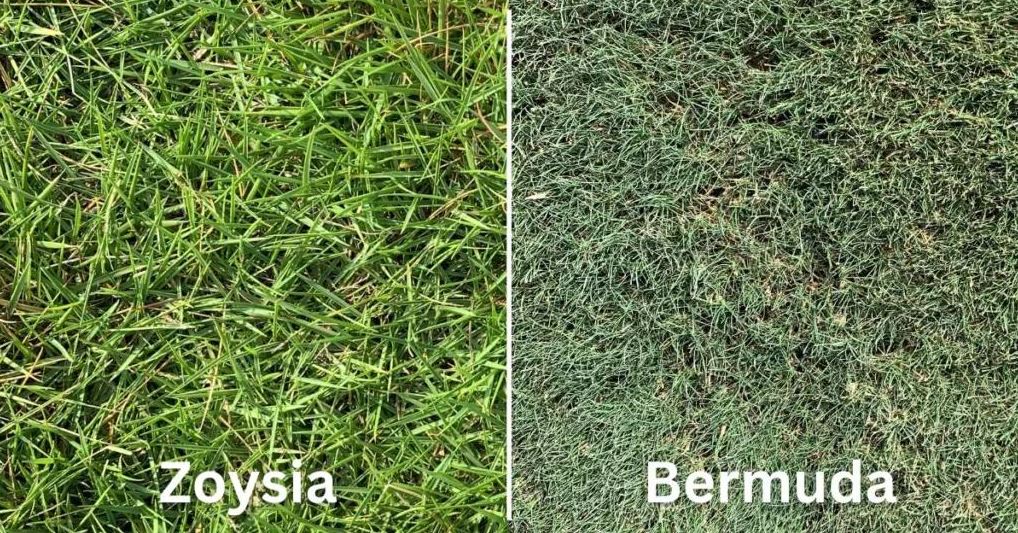
If you’re planning a new lawn in Georgia—or you’re trying to decide whether your existing turf is the right fit—you’ve probably come across two popular warm-season grasses: Bermuda and Zoysia.
Both can produce a beautiful, healthy lawn in Georgia, but they have different strengths and weaknesses.
So which one is better?
The answer depends on your property and how you want to use your lawn.
In this guide, we’ll compare Bermuda and Zoysia based on sunlight, shade tolerance, drought resistance, mowing, fertilization, appearance, and overall maintenance.
Now let’s take a closer look.
If your lawn receives plenty of direct sunlight, Bermuda is an excellent choice.
Bermuda thrives in full sun and can tolerate intense Georgia heat when properly established.
In fact, Bermuda generally performs best when it receives at least 6–8 hours of direct sunlight per day.
This makes it particularly well suited for open yards with few large trees.
Zoysia also performs well in sunny locations, although specific Zoysia varieties can vary in their sunlight requirements.
A healthy Zoysia lawn can perform very well in full sun but generally doesn’t have quite the same preference for intense sunlight as Bermuda.
Winner for full sun: Bermuda
This is one of the biggest differences between the two grasses.
Bermuda needs significant sunlight to remain dense and healthy.
If your yard has large trees, heavily shaded areas, or only a few hours of direct sunlight each day, Bermuda may become thin and struggle to compete.
This is one of the most common reasons homeowners see Bermuda lawns become patchy underneath trees.
Zoysia generally handles partial shade better than Bermuda.
That doesn’t mean Zoysia can grow in deep shade. No warm-season turfgrass performs particularly well without adequate sunlight.
However, if your property has a mixture of sun and partial shade, Zoysia may be the better option.
Winner for shade: Zoysia
Georgia summers can be hot and dry, making drought tolerance an important consideration.
Bermuda is known for its ability to handle heat and periods of drought.
Once established, Bermuda can survive extended periods of dry conditions by entering a state of dormancy.
The grass may turn brown during severe drought or winter dormancy, but healthy Bermuda can recover when favorable conditions return.
Zoysia also has good drought tolerance and can handle Georgia’s summer conditions.
However, drought resistance can vary depending on the specific variety, soil conditions, mowing practices, and overall lawn health.
Winner for drought resistance: Bermuda
Your choice of grass can also affect how often you’re pulling out the mower.
Bermuda is a fast-growing turfgrass during the active growing season.
That means it can require more frequent mowing, particularly when temperatures, moisture, and fertility are favorable.
Keeping Bermuda at the appropriate mowing height is important for maintaining a dense, healthy lawn.
Zoysia generally grows more slowly than Bermuda.
That can mean less frequent mowing, although Zoysia can still require regular mowing during peak growing conditions.
Because Zoysia is naturally dense, keeping the mower blade sharp is particularly important.
Winner for less frequent mowing: Zoysia
Both Bermuda and Zoysia benefit from proper nutrition, but they shouldn’t necessarily receive the same fertilizer program.
Bermuda is a relatively aggressive grower and can respond very well to proper fertilization.
During the growing season, Bermuda may have higher nitrogen requirements than Zoysia depending on soil fertility and the desired appearance of the lawn.
However, applying too much fertilizer can create problems.
Excessive nitrogen can encourage rapid growth, increase mowing requirements, and potentially contribute to certain turf problems.
Zoysia generally requires less aggressive fertilization than Bermuda.
A properly balanced fertility program can help maintain the dense, dark-green appearance homeowners often want from Zoysia.
As with any lawn, fertilizer applications should be based on the turf’s needs and, when appropriate, soil-test results.
Winner for lower fertilizer requirements: Zoysia
This category comes down largely to personal preference.
A well-maintained Bermuda lawn can have a dense, uniform appearance with a fine texture, particularly when properly mowed.
Bermuda is especially popular with homeowners who want a clean, manicured look.
Zoysia is known for producing a dense, lush-looking lawn with a somewhat thicker texture.
Depending on the variety, Zoysia can have a beautiful dark-green appearance and a very attractive, carpet-like quality.
Winner for appearance: It’s a tie.
The better choice depends on whether you prefer the finer texture and aggressive growth of Bermuda or the dense, lush appearance of Zoysia.
Neither grass is completely maintenance-free.
Both Bermuda and Zoysia benefit from:
– Proper mowing
– Appropriate fertilization
– Weed control
– Disease management
– Proper irrigation
– Good soil conditions
– Seasonal lawn treatments
Bermuda’s fast growth can mean more frequent mowing and more attention during the growing season.
However, its aggressive growth also allows it to recover relatively quickly from many types of damage.
Zoysia’s slower growth can mean less frequent mowing, but it can also mean slower recovery from damage.
If an area of Zoysia becomes severely damaged, it may take longer to fill back in naturally.
Winner for overall maintenance: Slight advantage to Zoysia, depending on the property.
Rather than saying one grass is universally better, it’s more helpful to choose based on your property’s conditions.
Your yard receives lots of direct sunlight.
Bermuda is an excellent choice for large, open lawns with plenty of sun.
It’s also a strong option if drought tolerance and fast recovery from traffic or damage are priorities.
Best for:
– Full-sun lawns
– Large open yards
– High-traffic areas
– Homeowners who don’t mind frequent mowing
– Properties where drought tolerance is important
Your yard has some partial shade and you want a dense, lush lawn.
Zoysia can be a great choice for homeowners who prefer a slightly slower-growing turf that doesn’t require quite as frequent mowing.
Best for:
– Lawns with partial shade
– Homeowners who prefer a dense, carpet-like appearance
– Moderate-traffic lawns
– Homeowners who want somewhat slower growth
– Properties where Bermuda may struggle with available sunlight
If your yard receives very little direct sunlight, neither Bermuda nor Zoysia may be the perfect solution.
Heavy shade can be challenging for warm-season turfgrass in general.
In these situations, homeowners may need to consider alternative landscaping solutions, pruning trees to increase sunlight, or selecting a more shade-tolerant turfgrass where appropriate.
One of the biggest mistakes homeowners make is choosing a grass because they like the way it looks in someone else’s yard.
The problem?
Their yard isn’t your yard.
Sunlight, soil, drainage, irrigation, traffic, mowing habits, and even the amount of shade throughout the day can dramatically affect turf performance.
A grass that thrives in one yard may struggle only a few houses away.
Before installing new turf, consider:
How much sun does my lawn receive?
How much shade does it receive?
How much maintenance am I willing to perform?
How much foot traffic will the lawn receive?
Does my soil drain properly?
Answering those questions can help you choose a turfgrass that is much more likely to succeed.
Choosing the right grass is only the beginning.
Even the best turfgrass can struggle without proper maintenance.
Bermuda and Zoysia both benefit from a properly timed lawn-care program that includes weed control, fertilization, disease management, and other seasonal treatments.
At EverGreen Turf Solutions, we help homeowners in McDonough, Ola, and throughout Henry County maintain healthy Bermuda and Zoysia lawns throughout the year.
Our approach is based on the needs of your turf and the season—not simply applying the same treatment to every lawn.
So, Bermuda vs. Zoysia—which grass is best for your Georgia lawn?
If you have a sunny, open yard and want excellent drought tolerance, fast recovery, and aggressive growth, Bermuda may be the better choice.
If your lawn receives partial shade and you prefer a dense, lush appearance with somewhat slower growth, Zoysia may be the better option.
And if your lawn has significant shade, it’s worth evaluating the site before choosing either one.
The best grass isn’t necessarily the grass that looks best in your neighbor’s yard. It’s the grass that is best suited to your property.
Whether you have Bermuda, Zoysia, or you’re trying to determine which turf is right for your property, EverGreen Turf Solutions can help.
We provide professional turf management services throughout McDonough, Ola, and Henry County, Georgia, helping homeowners maintain healthier, greener lawns throughout the year.
Healthy Lawns. Lasting Impressions.