
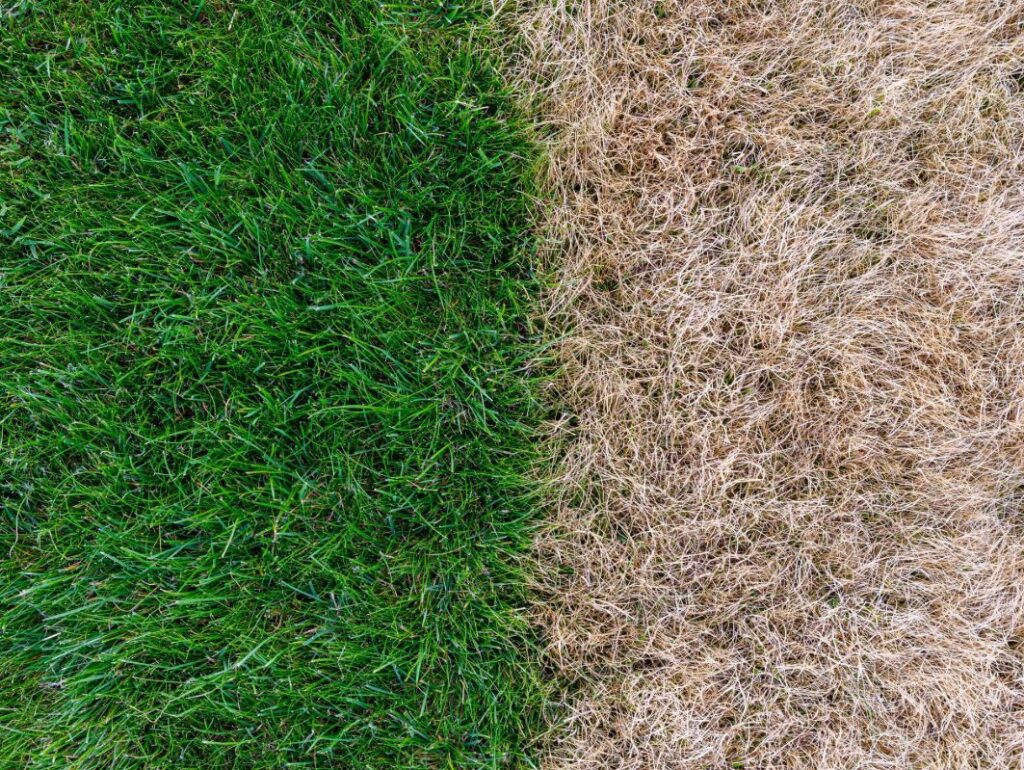
If you have Bermuda grass in your yard, you may have noticed something happening lately: your lawn is starting to turn brown.
Before you worry that your grass is dying, there’s a good chance you’re simply seeing a normal part of the Bermuda grass growing cycle.
As fall arrives in Georgia and temperatures begin to cool, Bermuda grass naturally prepares for winter by entering dormancy. This is completely normal—and understanding what’s happening can help you avoid making unnecessary or costly treatments to your lawn.
Bermuda grass is a warm-season turfgrass. It thrives during the warm months of spring and summer when temperatures and sunlight provide ideal growing conditions.
As temperatures drop in the fall, Bermuda grass begins to slow its growth. Eventually, it enters a dormant state and turns tan or brown.
This is the grass essentially shutting down for the winter and conserving energy until spring.
In the McDonough and Henry County area, Bermuda grass typically begins showing signs of dormancy during the fall as nighttime temperatures become consistently cooler. The exact timing can vary from year to year depending on temperatures, rainfall, sunlight, and the specific location of your lawn.
There are several reasons Bermuda grass can turn brown, but seasonal dormancy is one of the most common reasons this time of year.
As temperatures cool, the plant reduces its growth and gradually loses its green color. You may notice:
– Less mowing is needed
– Growth slows significantly
– The lawn begins changing from green to yellow or tan
– Some areas turn brown before others
– Shaded areas may change color differently than areas receiving full sun
This process can happen gradually rather than all at once.
It’s also common for a Bermuda lawn to look somewhat uneven during the transition into dormancy.
This is an important distinction.
Brown Bermuda grass isn’t necessarily dead Bermuda grass.
Dormant Bermuda can look completely brown while the crowns, roots, and underground rhizomes remain alive and healthy beneath the surface.
When warm temperatures return in the spring, the grass will begin coming out of dormancy and produce new green growth.
However, not every brown spot in a lawn is caused by dormancy.
If you notice small, isolated brown patches, rapidly expanding areas, unusual patterns, or sections of turf that look significantly different from the rest of the lawn, there could be another issue involved.
Potential causes include:
– Turf disease
– Insect activity
– Poor irrigation
– Compacted soil
– Drainage problems
– Mowing damage
– Heavy traffic
– Pet damage
– Root problems
That’s why it’s important to look at the overall pattern rather than assuming every brown area is simply winter dormancy.
This is where timing becomes especially important.
As Bermuda grass approaches dormancy, its ability to actively use nitrogen decreases. Applying large amounts of nitrogen too late in the growing season can encourage growth when the turf is preparing for dormancy rather than when it can make the best use of it.
A properly timed fall lawn treatment can be beneficial, but more fertilizer isn’t always better.
Your lawn’s needs depend on factors such as soil fertility, turf health, weather conditions, and the results of a soil test.
At EverGreen Turf Solutions, we focus on applying the right products at the right time rather than simply putting down fertilizer on a calendar.
As your Bermuda lawn transitions into dormancy, your goal should be to prepare it for winter—not force it to stay green.
Here are a few things homeowners can do:
Don’t stop mowing simply because the weather has cooled down.
Continue mowing as needed while the Bermuda is still growing. As growth slows, you will naturally mow less frequently.
A layer of leaves sitting on your lawn can block sunlight and trap moisture against the turf.
Regularly removing leaves helps protect the lawn as it enters dormancy.
A dormant Bermuda lawn is normal during the winter.
The brown color does not mean your lawn needs to be watered constantly or treated with additional fertilizer.
One of the most important fall lawn-care steps for Bermuda lawns is managing winter annual weeds.
Weeds such as annual bluegrass, chickweed, henbit, and other cool-season weeds can become established as Bermuda goes dormant.
A properly timed fall weed-control program can help prevent these weeds from taking over your lawn during the winter months.
Fall is also an excellent time to address problems that may affect your lawn next year.
Soil testing, weed control, proper fertilization, and identifying drainage or irrigation issues can all help set your Bermuda lawn up for a stronger spring.
Once spring arrives and temperatures consistently warm up, Bermuda grass will gradually come out of dormancy.
Don’t be surprised if your neighbor’s lawn starts turning green before yours—or vice versa.
Differences in sunlight, soil temperature, drainage, mowing practices, and microclimates can all affect when Bermuda breaks dormancy.
In Georgia, Bermuda typically begins waking up in the spring as soil and air temperatures rise consistently.
Patience is important.
Trying to force Bermuda out of dormancy too early can sometimes do more harm than good.
If your Bermuda grass is turning brown this fall, don’t panic.
For many Georgia lawns, the transition from green to brown is simply Bermuda grass preparing for its winter dormancy period.
The key is knowing the difference between normal seasonal dormancy and an actual lawn problem.
Proper fall weed control, appropriate fertilization, mowing, leaf management, and preparation for spring can all help keep your lawn healthy throughout the dormant season.
At EverGreen Turf Solutions, we provide professional turf management programs designed specifically for lawns in the McDonough and Henry County area.
We don’t believe in treating lawns with a one-size-fits-all approach. Our goal is to provide the right treatment at the right time to help your lawn stay healthy throughout the year.
Healthy Lawns. Lasting Impressions.
If your Bermuda grass is turning brown and you’re not sure whether it’s normal dormancy or a potential lawn problem, EverGreen Turf Solutions can help.
Contact us today to learn more about our professional turf management programs for homeowners in McDonough, Ola, and throughout Henry County, Georgia.